
Commercial Property. Explained. | A CBRE Private Wealth series
By Ingrid Filmer
Senior Managing Director, Capital Markets – Private Wealth, CBRE
Few things expose a commercial property investor faster than a major piece of plant failing. The tenant rings. The air-conditioning is down. They have a quote. The number is large. And the first question is usually:
“Who pays?’
The answer is not automatically “the landlord’ and it is not automatically “the tenant’.
The real answer starts with three questions:
Who owns the equipment?
What does the lease say?
Why did it fail?
Those three questions can turn what looks like a simple maintenance issue into a very different financial outcome.
Start with ownership
I have seen this play out in a property occupied by a large-format national tenant.
There were package air-conditioning units servicing offices on a mezzanine. Years later, the units needed replacement and the assumption was that the landlord should pay because the units were attached to the building and serviced the tenant’s premises.
But the historical records showed that the tenant had installed those units as part of its own fit-out.
That changed the discussion completely.
The difficulty was that the records were poor. People had changed, the fit-out was old and nobody could immediately tell who had originally paid for what.
That is why, when you buy a commercial property, you should not just collect the lease. You should collect the history of the building.
Look for the lease schedules, fit-out documents, incentives, plans, approvals, equipment schedules, service records and correspondence around major works. If there is a list or schedule showing landlord-owned and tenant-owned items, keep it with the property records.
This matters enormously in sectors where fit-outs are substantial.
Take childcare as an example. A childcare centre may have been delivered as a full turnkey project where the landlord funded virtually everything. In another property, the tenant may have installed a meaningful portion of the equipment itself.
Two buildings can look almost identical to an investor walking through them, but the ownership position underneath can be completely different.
The lease is the rule book
Once you know, or think you know, who owns the air-conditioning, go to the lease.
Do not rely on what normally happens.
Commercial leases can allocate repair, maintenance and replacement obligations in very different ways. One lease may require the tenant to maintain and service the air-conditioning while the landlord is responsible for major capital replacement.
Another may place broader obligations on the tenant. Another may carve out structural or capital items. A retail lease may also be affected by legislation that cannot simply be contracted around.
This is why one lease clause can materially change your real return.
A property can be marketed at a particular yield, but if the lease leaves you responsible for a major replacement program, the cash return you experience in a particular year can be very different from the headline yield.
When I am reviewing a property, I want to know the practical answer, not just the legal label.
Who arranges the servicing?
Who pays the regular service invoices?
Who pays for parts?
Who pays if a compressor fails?
Who pays if the entire unit reaches the end of its economic life?
Who is responsible if the equipment fails because it has not been properly maintained?
Those questions need to be answered from the lease, the ownership records and the factual history.
Repair and replacement are not always the same thing
Investors often assume that “maintenance’ means everything short of complete replacement.
It is rarely that simple.
There is a difference between routine servicing, repairing a failed component and replacing an entire system that has reached the end of its life.
The lease may draw those lines clearly. It may not.
That is why you want your solicitor to explain the clause in plain English before you buy. Ask them for the practical scenario:
“If this air-conditioning unit dies completely next year, who pays?’
That question is often more useful to an investor than simply reading several paragraphs of legal drafting.
Also ask whether the obligation changes depending on the cause of failure.
The cause of failure matters
This is the part people often miss.
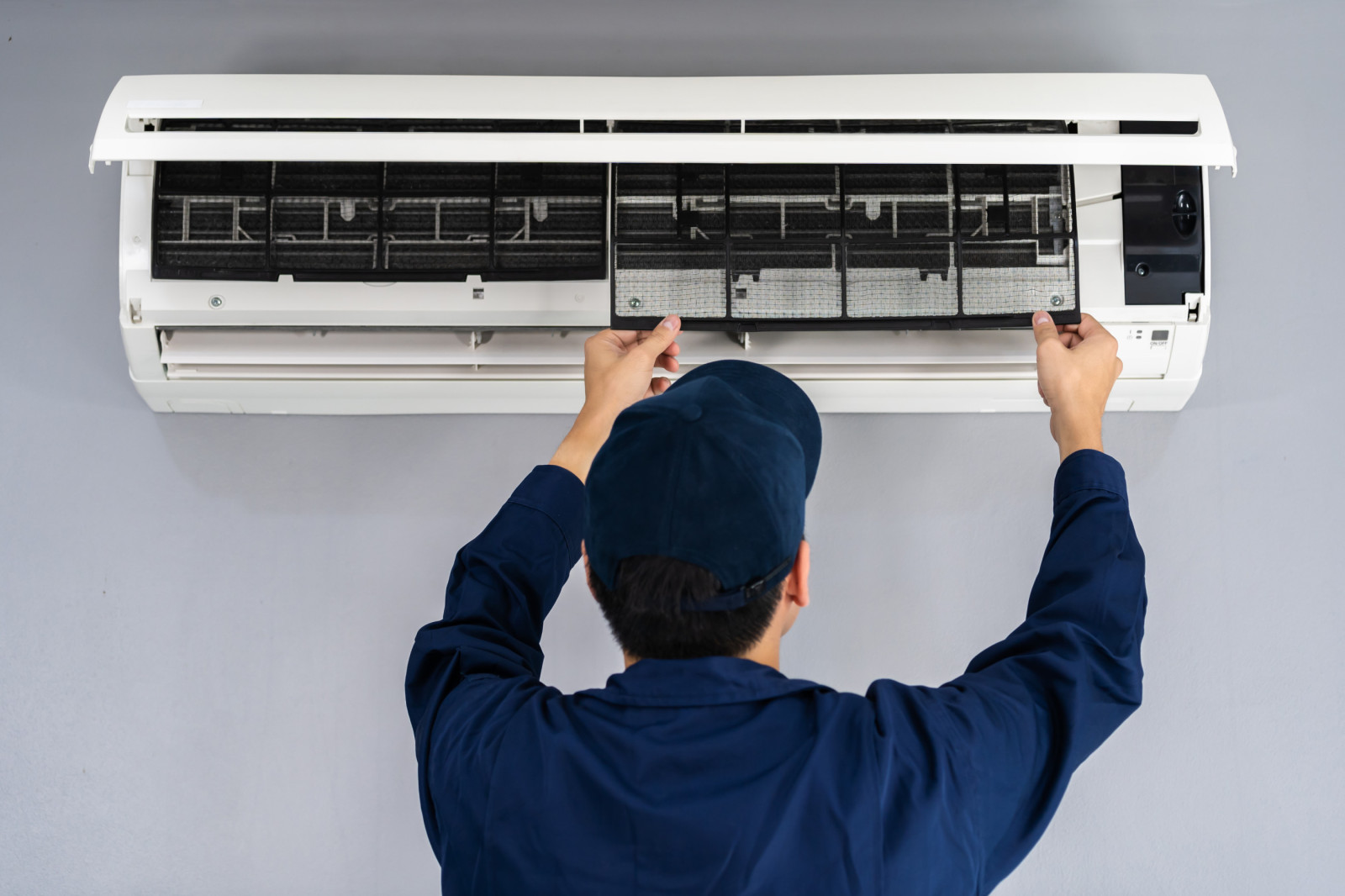
Imagine the tenant is required to service the air-conditioning every six months but has not done it for several years. The filters are blocked, the system has been run poorly and the lack of maintenance has materially shortened the equipment’s life.
That is a very different factual situation from a unit that has been properly maintained for 15 years and simply reaches the end of its useful life.
If the tenant’s failure to comply with its maintenance obligations caused or accelerated the failure, there may be a basis under the lease for the landlord to pursue the tenant for the resulting cost.
But you need evidence.
That is why maintenance records matter.
When you acquire a property with significant plant, ask for service histories. Find out who the contractor is. Confirm how frequently equipment is serviced. Check whether recommended works have been ignored. Keep invoices and reports.
Good record keeping can be the difference between having a genuine claim and having an argument based on memory.
Maintenance is not just about deciding who pays
There is a second lesson here.
Regardless of whether a particular maintenance invoice is paid by the landlord or the tenant, it is in the owner’s interest to know that the asset is being properly maintained.
Avoiding a relatively small service cost only to replace an expensive system years earlier than necessary is false economy.
If the tenant has the maintenance obligation, make sure there is a system for confirming it is being done. A lease clause sitting in a drawer does not service the air-conditioning.
For larger assets, this principle extends well beyond HVAC.
It can apply to automatic doors, shopfronts, stairs, lifts, pumps, fire systems, roller doors and other pieces of plant or infrastructure that can become expensive when they fail.
The same three questions still apply:
Who owns it?
What does the lease say?
Why did it fail?
A major capital bill can also become a leasing conversation
Sometimes the legal answer is that the landlord is responsible for a major replacement.
That does not mean the conversation has to stop there.
If you are about to spend a substantial amount of money on the property for the benefit of a sitting tenant, it may be an appropriate time to talk about lease security.
For example, if a tenant has an option approaching or only a relatively short term remaining, the landlord may decide that replacing a major system is an opportunity to negotiate an early exercise of the option, a lease extension or a new term.
That is a commercial negotiation, not an automatic entitlement.
The important point is that owners should think beyond the invoice.
If you are writing a large cheque for the building, ask what else should be resolved at the same time.
The investor due diligence checklist
Before buying a property with meaningful plant and equipment, I would want to know:
What major equipment is on site?
How old is it?
Who owns it?
Who installed it?
Where is that ownership recorded?
What does the lease say about servicing, repair, replacement and capital expenditure?
Are there service contracts in place?
Can I see the maintenance history?
Are there known defects or recommendations for replacement?
Has the tenant actually complied with its maintenance obligations?
Are any major systems near the end of their expected life?
If I had to replace one of them in the first year of ownership, who would pay under the lease?
That final question is particularly useful.
What I want handed over at settlement
This is also why the property handover matters. I do not want ownership to start with a folder containing only the executed lease and the keys.
For any property with meaningful plant, ask the vendor for the equipment schedules, warranties, service agreements, contractor details, recent invoices, maintenance reports and any outstanding recommendations. If the tenant has carried out fit-out works, identify which items remain the tenant’s property and which become the landlord’s property under the lease.
Then save those records somewhere they can actually be found.
Five years later, the person managing the property may never have met the person who negotiated the original lease. Good records remove guesswork and make it much easier to deal with a breakdown fairly and quickly.
A commercial property can look simple from the street. The building may have one tenant, one lease and one rent. But hidden in the plant and equipment can be future capital costs that materially affect your return.
The best time to understand them is before you buy.
And if the air-conditioning does die after settlement, do not begin with “landlord or tenant?’
Begin with the documents.
Who owns it? What does the lease say? Why did it fail?
Once you know those three things, you are in a much better position to work out who should pay.
Important note
Lease obligations vary from property to property and may also be affected by legislation in the relevant state or territory. This article is general investor education only. The lease and the factual history of the equipment should be reviewed by the appropriate advisers before responsibility for a repair or replacement cost is determined.
Commercial property does not need to feel too hard. Follow the series and let’s demystify it together.