
630,000 investors are looking at commercial property. So why does it still feel too hard?
17/09/2026
Commercial Property. Explained. | A CBRE Private Wealth series
By Ingrid Filmer
Senior Managing Director, Capital Markets – Private Wealth, CBRE
Around 630,000 residential property investors are considering moving into commercial property, according to buyer-sentiment research undertaken by Realcommercial across its platform. That is a very big number, but it makes sense.
Residential investors already understand the basic idea of property investment: borrow money, buy an asset, collect rent and hopefully benefit from long-term capital growth. But changes to residential tenancy laws, increasing holding costs and tax considerations are making many investors think more carefully about where their next investment dollar goes.
Commercial property is now a very real option. It can offer longer leases, potentially stronger income returns, different depreciation opportunities and, depending on the lease, tenants who contribute to many of the property outgoings.
Yet there is still one major barrier: people think commercial property is too complicated.
I do not believe it is. Commercial property is different from residential property, but different does not mean difficult. The problem is that much of the industry still speaks a language that first-time commercial buyers have never been taught. That is what this series is designed to change.
You already understand more than you think
If you already own residential investment property, you are not starting from zero. You understand purchase price, rent, tenants, borrowing, deposits, interest rates, settlement and the importance of location. You already know that two properties in the same suburb can perform very differently.
Commercial property uses the same foundations. There are simply a few extra things to understand, particularly the lease, the tenant’s business and the relationship between the income and the value of the property.
In some ways commercial property can actually be easier to analyse because so much of the investment is written down. The rent is in the lease. The annual increases are in the lease. The expiry date is in the lease. The tenant’s obligations are in the lease. The landlord’s obligations are in the lease. You just need to know where to look.
The first question is usually: what is it worth?
This is where many residential investors lose confidence. Most experienced residential buyers can get a reasonable feel for the value of a house. They look at the street, bedrooms, bathrooms, land size, condition and recent comparable sales.
Commercial property feels less obvious because you are not only buying the building. You are also buying the income attached to it.
Two almost identical buildings can have very different values. One might have 12 years remaining on a lease to a strong tenant. The other might have two years left. One might be earning $200,000 a year. The other might be earning $150,000. One rent might be comfortably in line with the market while the other is significantly above market.
That is why commercial property buyers talk so much about yield. Yield is simply a way of comparing the annual income with the price paid. If a property produces $60,000 a year in net income and sells for $1 million, the yield is 6 per cent.
The calculation is easy. The interesting part is understanding why one property sells on a 5 per cent yield and another sells on 7 per cent. Usually the answer lies in the tenant, lease, location, property quality and future risk. Once you learn to identify those things, pricing becomes much easier to understand.
The lease looks intimidating, but break it down
A residential lease is normally a short prescribed document. A commercial lease can run for dozens of pages, so first-time buyers often look at it and think, how am I ever going to understand this?
You do not need to become a property lawyer. A commercial lease is longer because the relationship between a landlord and a business is more detailed. Most of what you need to understand sits within a few key areas.
Rent and rent reviews
First, what is the tenant paying? Is the rent inclusive or exclusive of GST? What other costs are paid separately? Then look at how the rent changes. It might increase by a fixed percentage, move with CPI or be reviewed to market at certain points.
Strong fixed increases can look fantastic, but they still need to be sustainable. If rent grows much faster than the market, the property can become over-rented. That may create a problem when the tenant leaves or the lease is renegotiated.
Lease term and options
A lease described as 10 years + 10 years + 10 years does not usually mean the landlord has 30 years of guaranteed income. The first 10 years may be the committed term, while the additional periods are options held by the tenant. The tenant decides whether to exercise them. That difference matters when you assess income security.
Maintenance, make-good and assignment
The lease will also tell you who is responsible for maintenance and repairs, what happens to the premises when the tenant leaves, and whether the tenant can transfer the lease to someone else.
For example, the tenant might be responsible for servicing the air-conditioning but the landlord might still be responsible for replacing a major system when it reaches the end of its life. A make-good clause might require the tenant to remove its fit-out or return the property to an agreed condition. Assignment provisions explain when a tenant can transfer its lease.
Then there are the basic rules of engagement: pay the rent, maintain required insurance, keep the agreed security in place, comply with the permitted use and follow the lease.
Once you know which sections matter, a long commercial lease becomes far less frightening. And you are not expected to do this alone. Good commercial property lawyers and agents deal with these documents every day.
Commercial property is not only for very wealthy investors
Another misconception is that commercial property automatically means a $20 million office building or a huge shopping centre.
At CBRE Private Wealth, we deal with assets from around $750,000 through to hundreds of millions of dollars. There is commercial property at almost every price point and across almost every industry.
You can find a childcare centre for around $2 million and another childcare centre worth $15 million. You can find a fast-food investment around $1 million and another worth $10 million. There are retail shops, medical properties, warehouses, service stations, supermarkets, offices, childcare centres and large-format retail properties across a wide range of values.
The question is not whether commercial property is affordable in theory. It is which type of commercial property fits your capital, borrowing capacity and appetite for risk.
Start with something you understand
For many first-time commercial investors, retail is an easy place to start learning because they already understand the businesses.
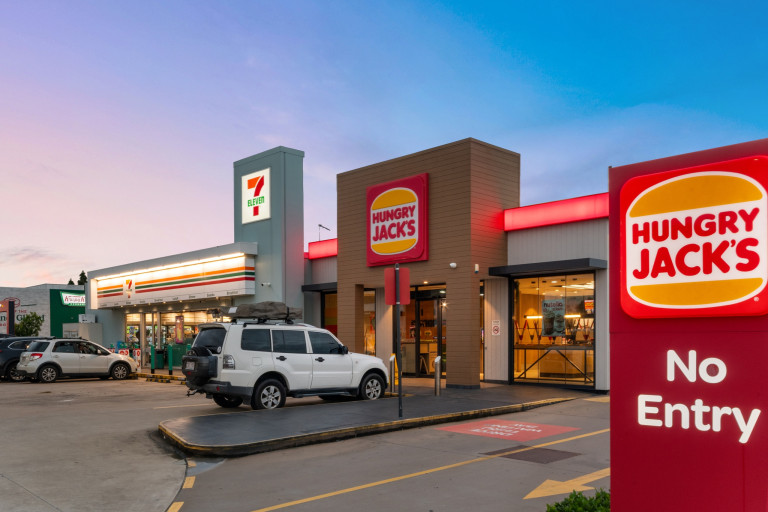
You have eaten at the fast-food restaurant. You have shopped in the supermarket. You have filled your car at the service station. You can see the parking, traffic and surrounding businesses. You can get a feel for whether the location makes sense for that particular tenant.
That does not replace proper due diligence, but it makes the property easier to understand. The best commercial property investors do not only look at a spreadsheet. They ask whether there is a sensible relationship between the tenant, the property and the location.
My five questions for any commercial property
When I first look at a commercial investment, I come back to five simple questions.
1. What is the rent?
How much is the tenant paying, how does it grow and is it sustainable? Just as importantly, what would another tenant pay if you had to lease the property again today?
2. What does the lease say?
How long is the tenant committed? What are the options? Who pays the outgoings? Who maintains the property? What security does the landlord hold?
3. What is the underlying property worth?
Do not become so focused on the lease that you forget you are buying real estate. What is the land worth? What have comparable properties sold for? Could the property have another use in the future?
4. Is this the right property for this tenant?
Is the shop or building the right size? Is there enough parking? Is it visible and accessible? Is it in the sort of location this tenant wants to operate from? There should be a sensible, almost symbiotic relationship between the tenant and the property.
5. What happens if the tenant leaves?
This is one of the most important questions of all. Who could replace them? What rent might that tenant pay? How long might the property sit vacant? Would you need to provide an incentive or spend money on a new fit-out?
Every lease ends eventually. A good investment should still make sense when you look beyond today’s tenant.
Commercial property is not complicated. It is unfamiliar.
Nobody is born knowing what a yield is. Nobody instinctively understands a bank guarantee, a make-good clause or the difference between a firm lease term and an option. You learn it.
Once somebody explains these concepts in plain English, commercial property becomes much easier to assess. For the hundreds of thousands of residential investors considering the move, my message is simple: you already understand property. Now you just need to learn a few new rules.
Over the coming Commercial Property. Explained. series, CBRE Private Wealth will break those rules down one at a time. We will explain yields, leases, tenants, bank guarantees, outgoings, finance, auctions, valuation and what happens when a tenant leaves.
No jargon for the sake of jargon. No assumption that you already know the answer. Just simple answers to the questions buyers actually ask.
Commercial property does not need to feel too hard. Follow the series and let’s demystify it together.